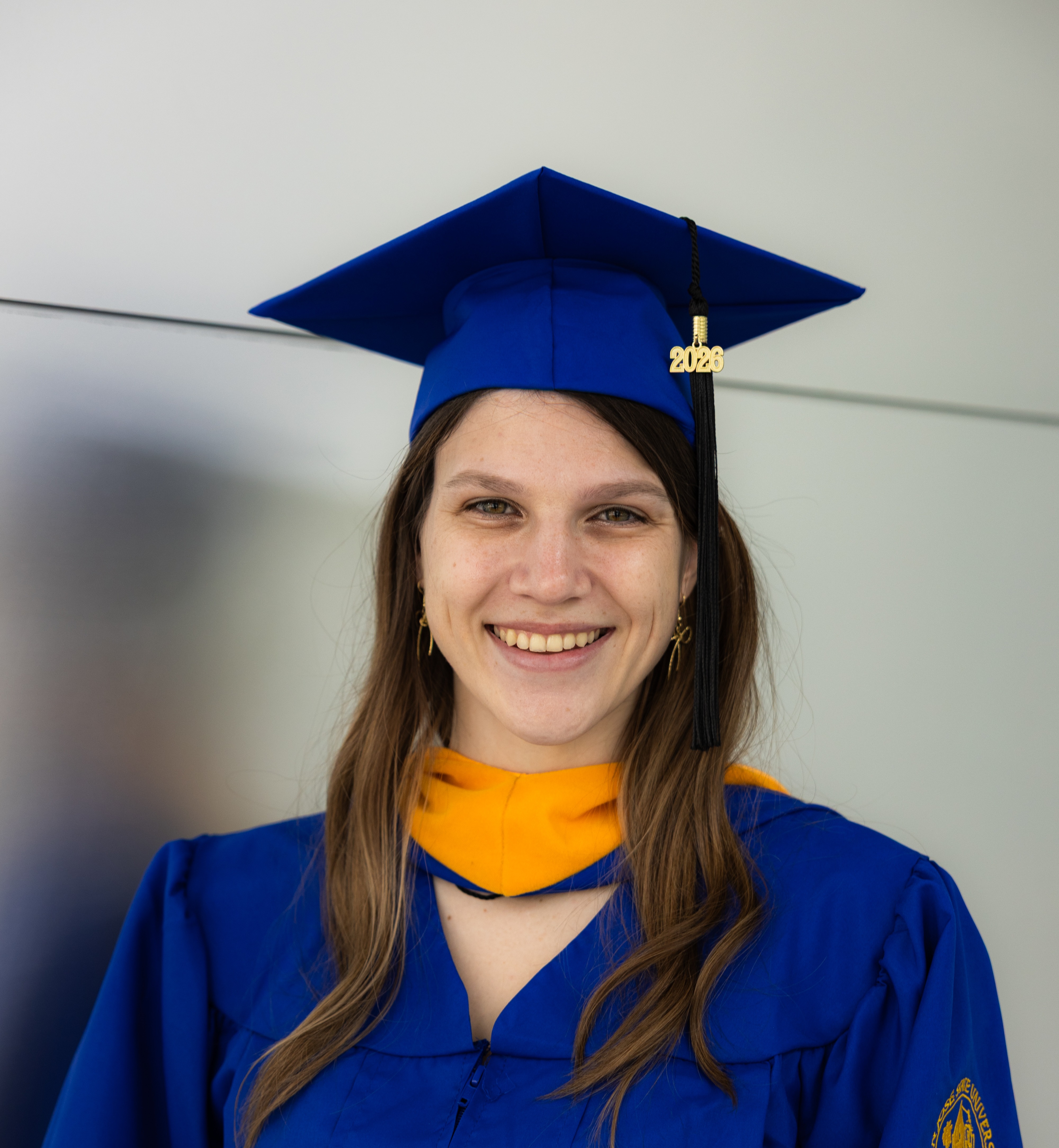
Hello! I am a PhD student in the Security and Privacy Lab at the University of Washington Paul G. Allen Center for Computer Science and Engineering. I am honored to be advised by Dr. Franzi Roesner.
Warning
Problem: The current name of your GitHub Pages repository ("Solution: Please consider renaming the repository to "
http://".
However, if the current repository name is intended, you can ignore this message by removing "{% include widgets/debug_repo_name.html %}" in index.html.
Action required
Problem: The current root path of this site is "baseurl ("_config.yml.
Solution: Please set the
baseurl in _config.yml to "Education
-
 University of WashingtonDepartment of Computer Science and Engineering
Ph.D. StudentSep. 2026 - present -
 San Jose State UniversityM.S. in Artificial IntelligenceAug. 2024 - May 2026
 -
 California State University, SacramentoB.S. in Computer ScienceAug. 2019 - May 2024
Experience
-
 AI Institute for Agent-based Cyber Threat Intelligence and Operation at UCSBAI Research InternJun. 2025 - Sept. 2025
News
Selected Publications (view all )
Accessibility Fairness Practices in AI Applications for People With Disabilities
Megan Gross
San Jose State University 2026
Thesis for 2026 MS Artifical Intelligence degree. This research evaluates ChatGPT and Gemini in Gmail for usability fairness and analyzes how current regulations and development processes fail to account for the uniqueness of GenAI. Through manual and automatic testing, common end-user GenAI experiences are evaluated using current technical standards and a proposed AI-specific framework.
Accessibility Fairness Practices in AI Applications for People With Disabilities
Megan Gross
San Jose State University 2026
Thesis for 2026 MS Artifical Intelligence degree. This research evaluates ChatGPT and Gemini in Gmail for usability fairness and analyzes how current regulations and development processes fail to account for the uniqueness of GenAI. Through manual and automatic testing, common end-user GenAI experiences are evaluated using current technical standards and a proposed AI-specific framework.
Accessibility Fairness in AI: Case Study on ChatGPT and Gemini
Megan Gross, Way Kiat Bong, Bernardo Flores
The Journal on Technology and Persons with Disabilities 2026
This paper evaluates the accessibility fairness of Generative AI for PWDs and investigates how current AI technology may neglect to address specific problems they face. Through automatic testing of two Generative AI models, OpenAI’s ChatGPT and Google’s Gemini, the usability of each model is explored. Comparisons are made between standalone technology like ChatGPT and integrated technology like Gemini in Gmail.
Accessibility Fairness in AI: Case Study on ChatGPT and Gemini
Megan Gross, Way Kiat Bong, Bernardo Flores
The Journal on Technology and Persons with Disabilities 2026
This paper evaluates the accessibility fairness of Generative AI for PWDs and investigates how current AI technology may neglect to address specific problems they face. Through automatic testing of two Generative AI models, OpenAI’s ChatGPT and Google’s Gemini, the usability of each model is explored. Comparisons are made between standalone technology like ChatGPT and integrated technology like Gemini in Gmail.
Demystifying Cipher-Following in Large Language Models via Activation Analysis
Megan Gross, Yigitcan Kaya, Christopher Kruegel, Giovanni Vigna
Mechanistic Interpretability Workshop at NeurIPS 2025
Cipher transformations have been studied historically in cryptography, but little work has explored how large language models (LLMs) represent and process them. We evaluate the ability of three models: Llama 3.1, Gemma 2, and Qwen 3 on performing translation and dictionary tasks across ten cipher systems from a variety of families, and compare it against a commercially available model, GPT-5. Beyond task performance, we analyze embedding spaces of Llama variants to explore whether ciphers are internalized similarly to languages.
Demystifying Cipher-Following in Large Language Models via Activation Analysis
Megan Gross, Yigitcan Kaya, Christopher Kruegel, Giovanni Vigna
Mechanistic Interpretability Workshop at NeurIPS 2025
Cipher transformations have been studied historically in cryptography, but little work has explored how large language models (LLMs) represent and process them. We evaluate the ability of three models: Llama 3.1, Gemma 2, and Qwen 3 on performing translation and dictionary tasks across ten cipher systems from a variety of families, and compare it against a commercially available model, GPT-5. Beyond task performance, we analyze embedding spaces of Llama variants to explore whether ciphers are internalized similarly to languages.